Dry steam cleans rails, mattresses and nap mats with heat and very little water. Where no detergent is used, nothing is left on a rail a resident grips or a mat a child sleeps on.
Supplying steamers since 2013 ·Supplied and serviced from the Eastern Cape ·Steam Italy (Italy) and Optima (Korea)
The problem
Your protocol is followed. That is not the problem.
Whatever you clean with is still in the room when the cleaning is done.
A residue nobody can see
Disinfectant dries on the rail and stays on it until the next hand picks it up, whether that hand belongs to a resident or a child.
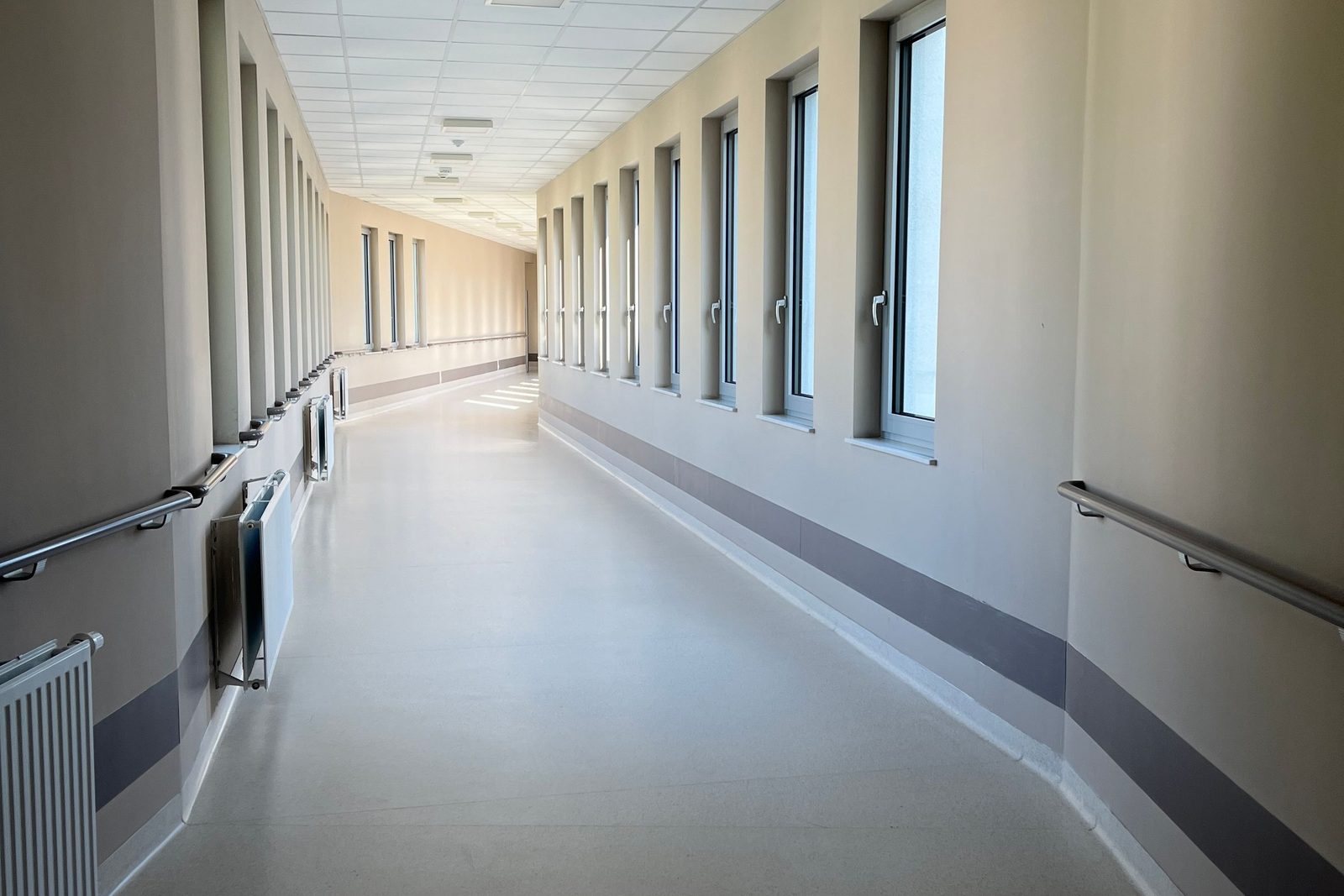
Fumes in a room nobody can leave
Concentrated product, several times a shift, in a room occupied by people already short of breath. Your cleaners breathe it for years.
A wet floor with people walking on it
Mopping leaves one, and a fall is what this sector plans its whole day around.
Why steam, here
A cloth wipes the face. Steam gets into the hinge, the seam and the wheel housing.
The steam itself needs no chemical, and it puts very little water on the floor. The 3000 and the INOX 6000 can also inject detergent where your protocol calls for it.
Six of the places it reaches:
Bed rails
Grab rails
Commode joints
Mattresses
Nap mats
Pram buckles
The steamer
Which steamer, and why
PC
Moves room to room and up a flight of stairs without a trolley.
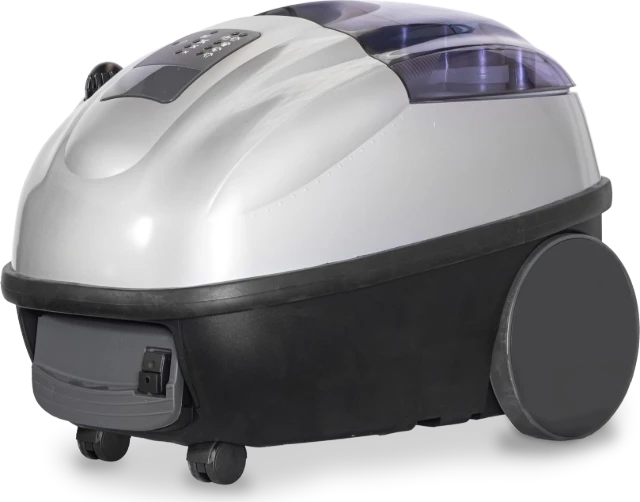
3000
For cots, nap mats and changing surfaces in a room that is still in use.
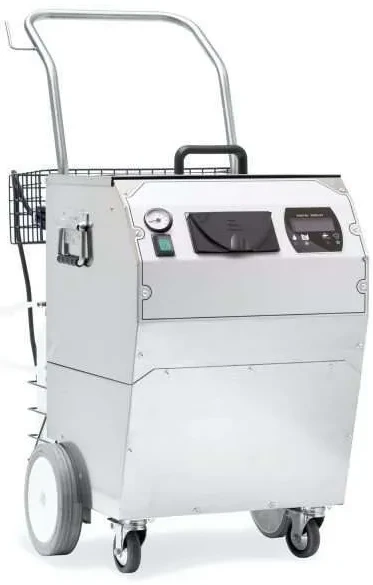
INOX 6000
For a clinic or a creche cleaning between sessions, on an ordinary plug.
For clinics, consulting rooms and creches, where surfaces get cleaned between people. At 14 kg it wheels from room to room, and it steams, vacuums through a water filter and jets water.
For kitchens, butcheries, bakeries, guest houses and creches. It steams and vacuums in one unit, runs off an ordinary plug, and draws its steam from an AISI 304 stainless steel boiler.
Your kitchen is a food premises and it is inspected as one, whatever else the facility is.
What R638 asks of a facility kitchen
R638, the food premises regulations
It sets the standard your premises is held to and does not name a cleaning method. No supplier can tell you that a particular machine satisfies it. What a machine can do is make the surfaces it covers easier to keep at that standard.
Does steam cleaning replace our disinfection protocol?
No. It is a cleaning method that works with heat. It does not replace your infection prevention and control protocol, and it does not replace a clinical disinfectant where your protocol specifies one. Whoever owns that protocol assesses it and, if they adopt it, writes it in.
Does it reduce how much chemical we buy?
It can. By how much depends on what your protocol requires you to keep, and that's for whoever owns your protocol to decide.
What training do cleaning staff need?
We train your team when the steamer arrives, and it's short. Dry steam gets misused when people treat it like a pressure washer or work at the wrong distance.
Bring whoever owns your cleaning protocol into the conversation.
They own the protocol, so they'll have the right questions. A specialist will answer them and quote the steamer that suits the building.