
Certificate of Acceptability
Your cleaning method alone does not decide whether you get the certificate. What the inspection looks at includes your surfaces, your equipment and your records, and a documented cleaning process helps with all three.
For commercial kitchens and food prep
Dry steam shifts the grease with heat and very little water, not caustic.
Talk to a specialist See the range
Supplying steamers since 2013 Supplied and serviced from the Eastern Cape Steam Italy (Italy) and Optima (Korea)
The problem
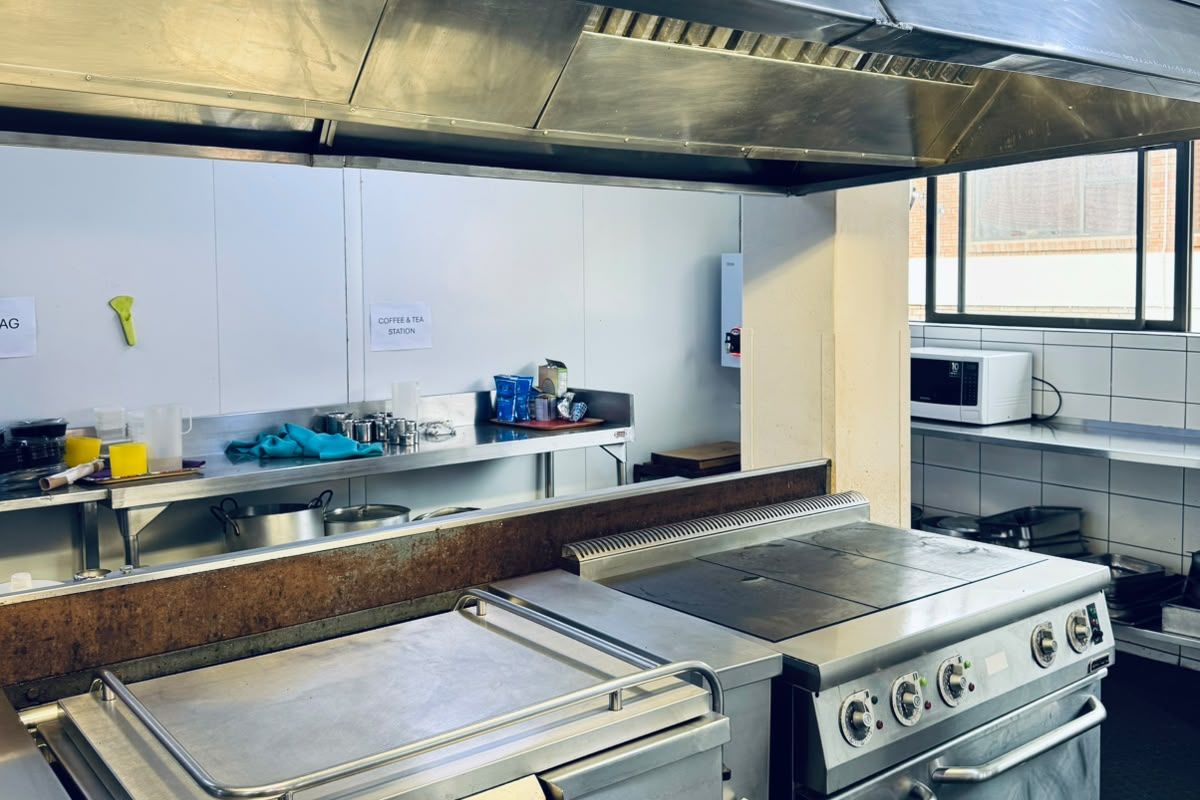
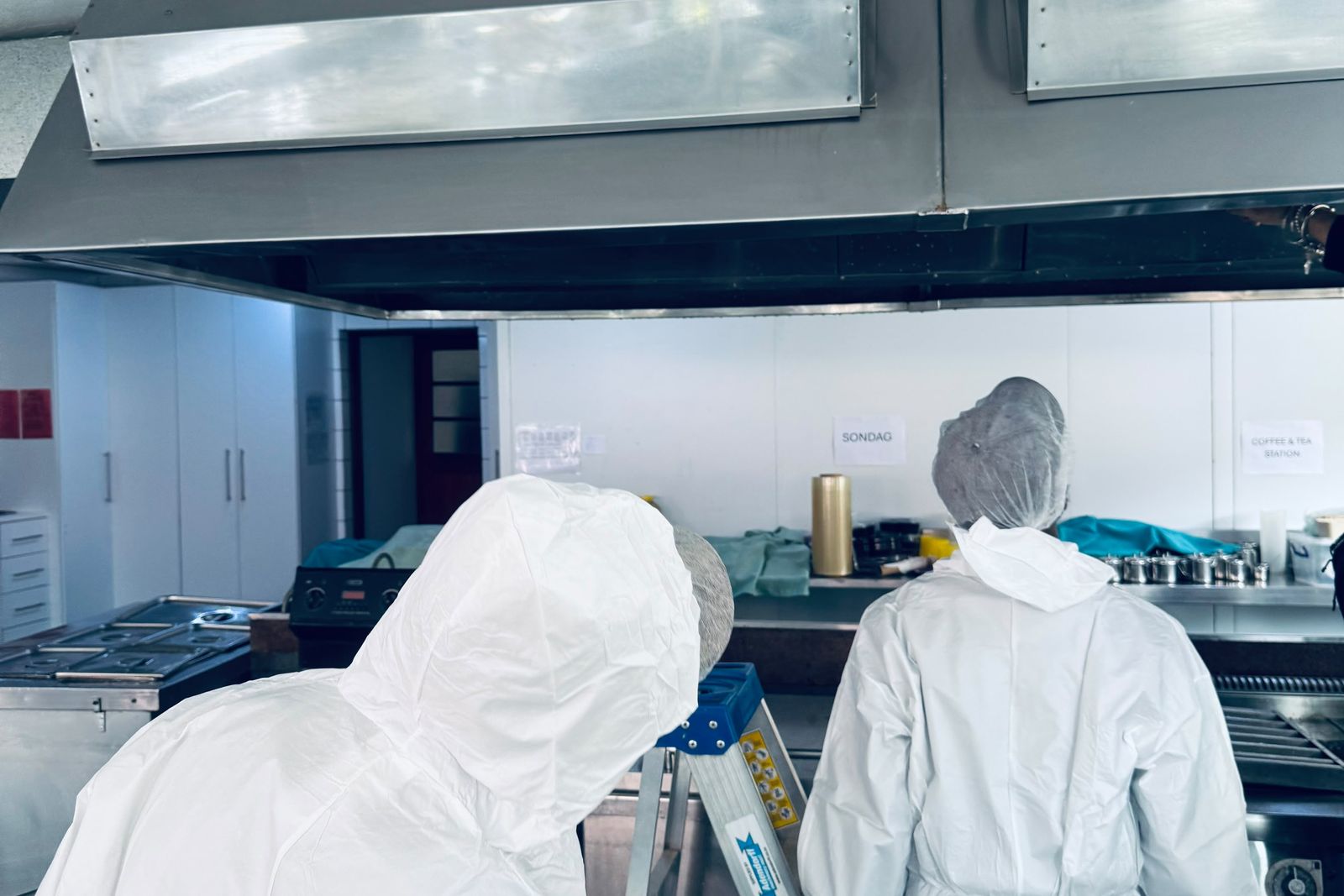
Look up first. Canopy grease sets into a hard, layered film. A degreaser won't lift it, so the products that do are caustic.
Now look behind the fryer and up on the gantries, where nobody moves anything.
Then look down. A mop pushes dirt into the grout, which stays damp. You're moving it, not removing it.
Which of the three costs you most?
Ask about your lineWhy steam, here
You already pay a contractor to clean the canopy. Do the routine cleans in-house and that part of the invoice goes. Duct and canopy certification usually stays with the contractor.
X-STEAM steam output
0 to 324 grams a minute
Adjustable: full output for the canopy, turned down for grout.
Steam Italy X-STEAM datasheet
First steam socket. The second is 0 to 220 grams a minute. Higher figures on the sheet include injected detergent or hot water.
Where it lives
Start with these three
The steamer
 Electric, single-phase
Steam Italy
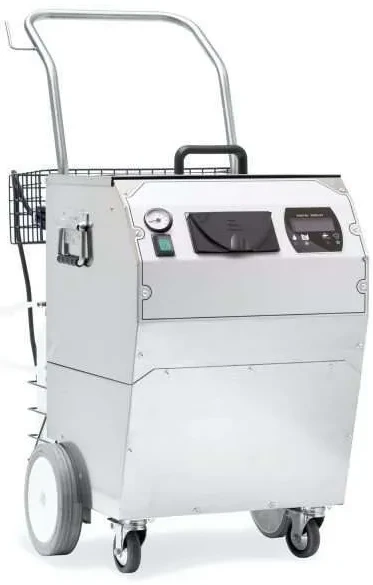
INOX 6000
Steam and vacuum, with a 9 litre waste tank
37 kg weight
4 min to heat up
5 L water tank
 Electric, single-phase
Steam Italy
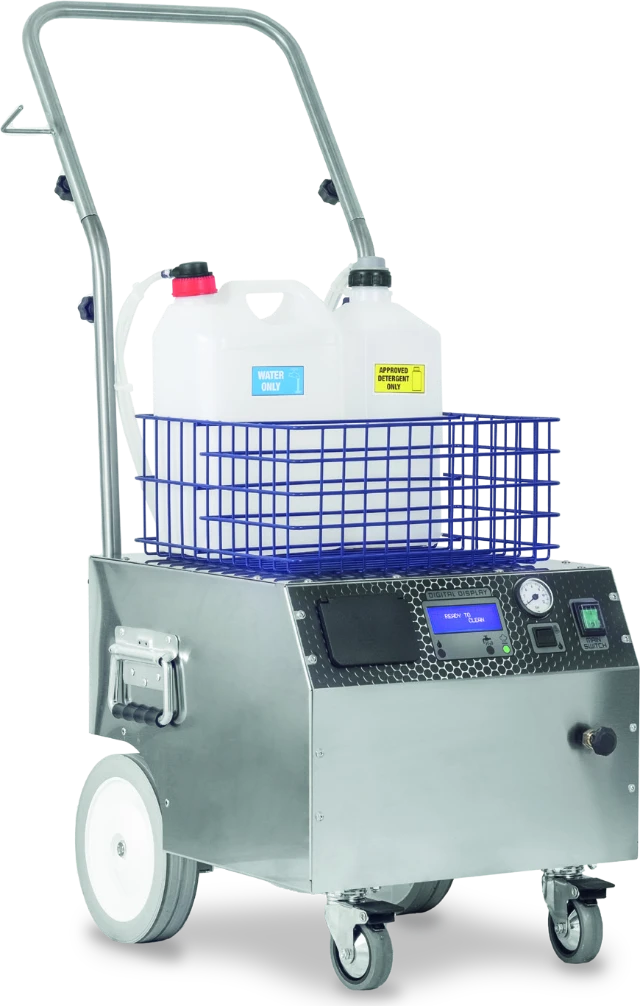
INOX 8000XL
156 grams of steam a minute, ready in 3 minutes
34.5 kg weight
3 min to heat up
5 L water tank
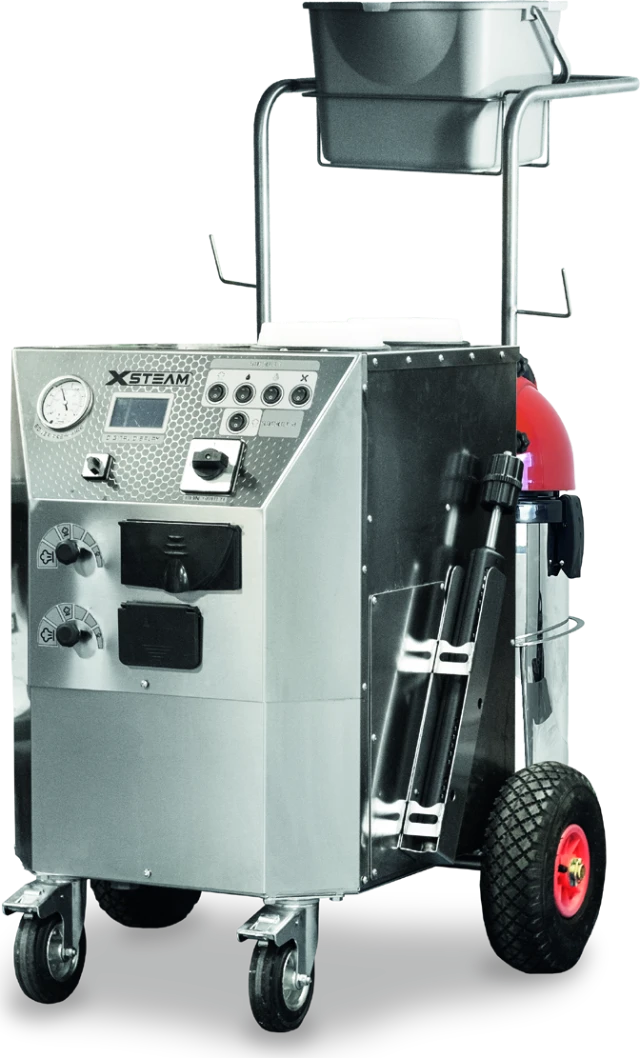 Electric, three-phase
Steam Italy
X-STEAM
Steam, detergent, water jet and suction in one
65 kg weight
4 min to heat up
Two people at once
Steam Italy, built in Italy
Steam and vacuum, with a 9 litre waste tank
For kitchens, butcheries, bakeries, guest houses and creches. It steams and vacuums in one unit, runs off an ordinary plug, and draws its steam from an AISI 304 stainless steel boiler.
37 kg
weight
4 min
to heat up
5 L
water tank
Comes with
Optional extras
Ask a specialist which accessories suit your job.
12-month factory warranty Maintenance plans After-sales service in major cities
Steam Italy, built in Italy
156 grams of steam a minute, ready in 3 minutes
For kitchens, butcheries, cold rooms and guest houses. It makes 156 grams of steam a minute, refills itself so the steam does not stop, and has a push handle and wheels for moving between jobs.
34.5 kg
weight
3 min
to heat up
5 L
water tank
Comes with
Optional extras
Steam Italy does not publish a vacuum figure for the 8000XL. These are the hoses it ships with.
Ask a specialist which accessories suit your job.
12-month factory warranty Maintenance plans After-sales service in major cities
Steam Italy, built in Italy
Steam, detergent, water jet and suction in one
For commercial kitchens with three-phase power. It has the XSTEAM 18K's two outlets on a 9 kW boiler, at 65 kg instead of 80, takes a mains water feed, and steams, injects detergent and vacuums.
65 kg
weight
4 min
to heat up
Two people at once
Comes with
Optional extras
Ask a specialist which accessories suit your job.
12-month factory warranty Maintenance plans After-sales service in major cities
Inspection
An environmental health practitioner does not ask what machine you own. A cleaning record that says what was cleaned, how and when is evidence. "We clean nightly" is not. That is what changes an inspection, and it is worth being exact about the limit: no supplier can tell you that a machine satisfies R638, and anyone who does is telling you something they cannot support.
Your cleaning method alone does not decide whether you get the certificate. What the inspection looks at includes your surfaces, your equipment and your records, and a documented cleaning process helps with all three.
Often, yes. Steam softens the layer with heat, and on the INOX 6000 and X-STEAM the vacuum takes it off the surface. Send us a photo of yours and a specialist will tell you how far steam gets.
Floors, grout and behind fixed equipment, yes, outside a rush. The canopy sits over food-contact surfaces, so do it after close.
Yes, on sound grout: it is gentler because it doesn't soak it. Where grout has cracked or gone soft, steam opens the gap further, so repair it first. Printed or painted finishes need the right distance, which the training covers.
Send a specialist a photo of the worst section. They'll tell you what steam lifts and which steamer suits you.
Or see all seventeen steamers. See the range