
For automotive and fleet
Wash the vehicle where it stands.
Dry steam cleans the vehicle where it is parked, on a few litres of water.
Talk to a specialist See the range
Supplying steamers since 2013 Supplied and serviced from the Eastern Cape Steam Italy (Italy) and Optima (Korea)
The problem
The constraint everything else follows from
There is no wash bay where your vehicles stand, and no drain under them.
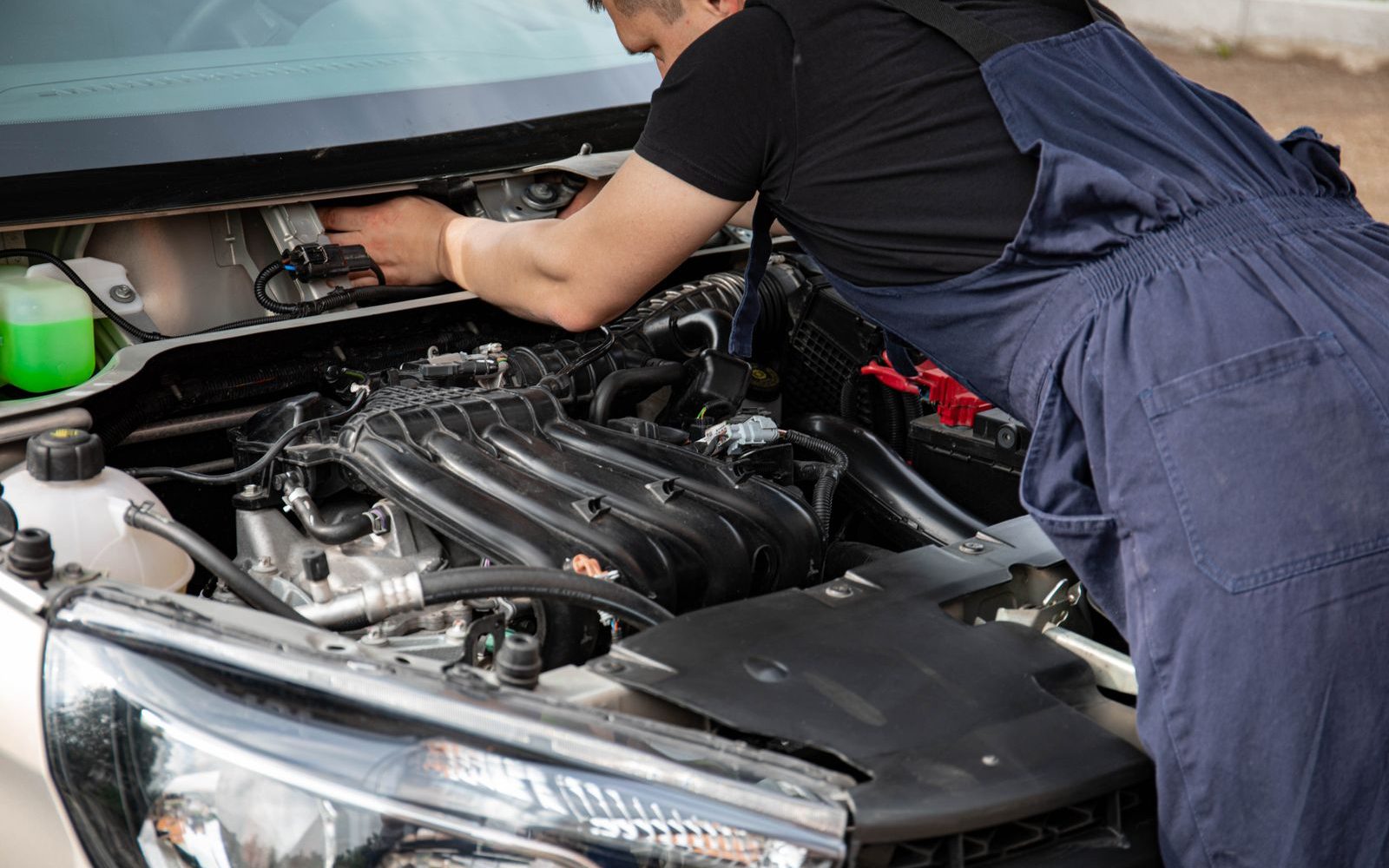
The engine bay gets skipped
Pressure washing risks forcing water into sensors, looms and connectors, so the engine bay often gets skipped. The vehicle goes back out with the grease still on it.
The interior costs you the afternoon
Wet extraction can keep a vehicle off the road for hours while it dries, and a damp interior can pick up a smell.
Building the bay is not one cost
Drainage, an oil and silt trap and, in many municipalities, a permit. Washing without one is an environmental compliance question rather than a housekeeping one.
Want to know whether a steamer pays for itself across your fleet?
Work out the paybackWhy steam, here
Same vehicle, same job, and only one of them needs a drain.
Here the steamer can earn, not only save. Optima's brochure says a wash done at the customer's premises, with almost no water, carries a premium rate.

Where it lives
Start with these three
- Engine bays
- Engines are full of sensors, looms and control units, and pressure washing risks forcing water into the connectors. Dry steam carries very little water and lifts grease with heat, not pressure.
- Vehicle interiors
- Seats, carpets, headliners and vents. Wet extraction keeps a vehicle off the road for hours. Steam with a hand tool cleans it and the vehicle goes back out.
- Wheel arches and undercarriages
- Brake dust, road film and grease, where a brush does not reach. Steam releases them without the run-off that turns a wash bay into a drainage problem.
The steamer
Which steamer, and why
- XD
- For a fleet yard or a customer's driveway, with no tap and no bay.
- XDm
- For one person working alone. Its smaller tanks mean more refills.
- DMF
- Two outlets like the XD, with smaller 20 litre tanks.
- INOX 7000
- For valet work under cover, where there is a plug. It does interiors with steam and vacuum in one unit.
- INOX 8000
- Also for work under cover, with detergent for an engine bay or a wheel arch that needs it.
 Diesel
Optima
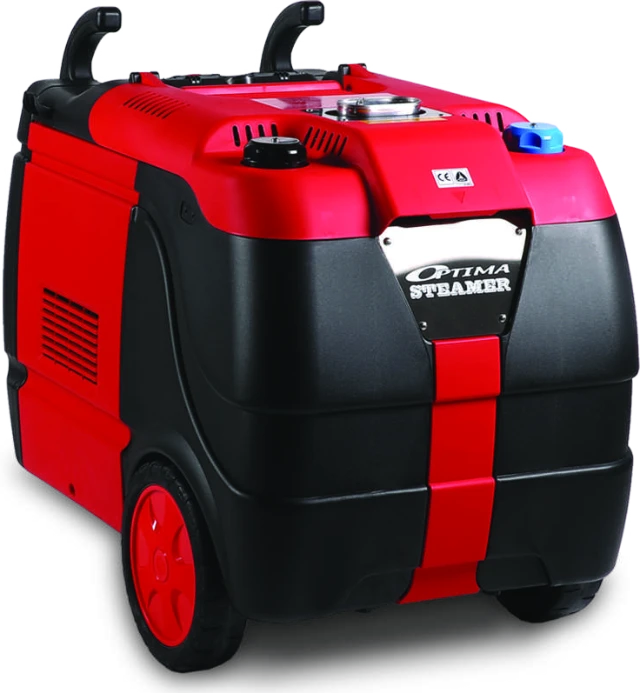
XD
Diesel, two outlets, 36 litre tanks
89 kg weight
3 to 4 min to heat up
36 L water tank
 Diesel
Optima
XDm
The 52 kg diesel, for the bakkie
52 kg weight
3 min to heat up
11 L water tank
 Diesel
Optima
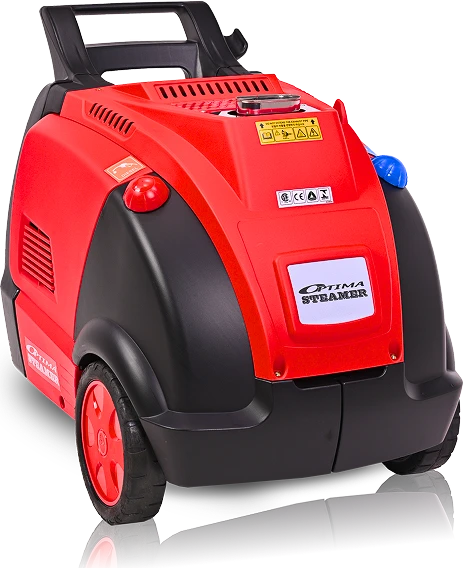
DMF
Diesel, two outlets, 20 litre tanks
83 kg weight
3 to 4 min to heat up
20 L water tank
 Electric, single-phase
Steam Italy
INOX 7000
Steams and vacuums, with a pressure display
25 kg weight
4 min to heat up
Digital pressure display
 Electric, single-phase
Steam Italy
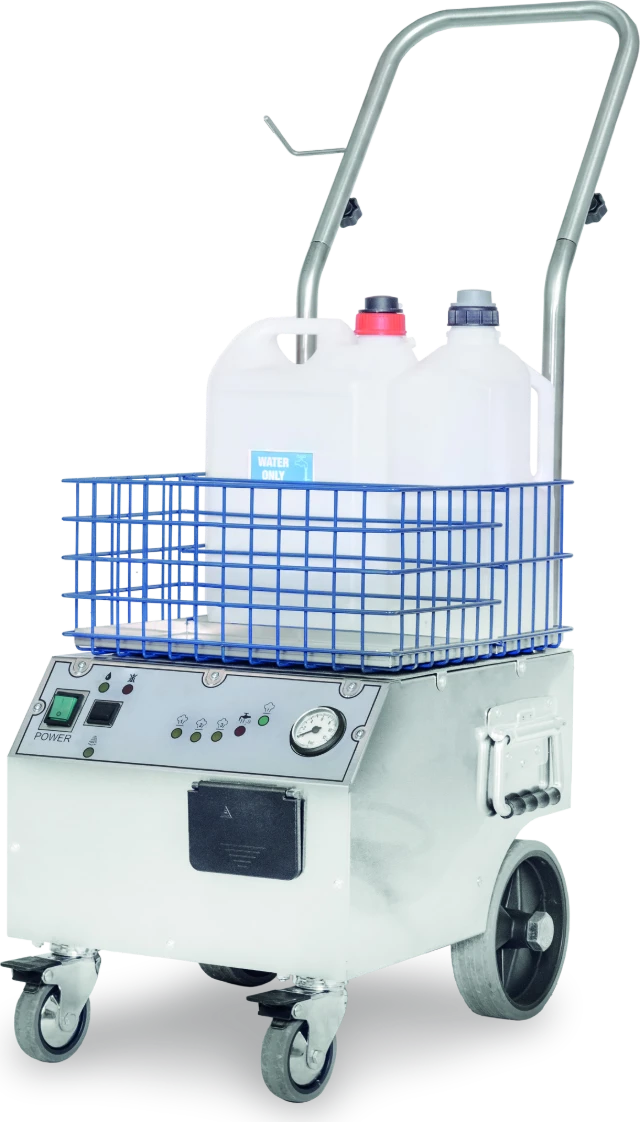
INOX 8000
17 kg, steams, vacuums and injects detergent
17 kg weight
4 min to heat up
5 L water tank
Optima, built by SJE Corporation in Korea
Diesel, two outlets, 36 litre tanks
For mobile car washing and fleet work. The heat comes from diesel, not the mains. This diesel steam cleaner carries 36 litres of water and 36 of fuel, and heats in 3 to 4 minutes.
-
89 kg
weight
-
3 to 4 min
to heat up
-
36 L
water tank
Performance
- Operating pressure How hard the steam pushes while the steamer works, in bar.
- 8.5 bar
- Maximum pressure The highest pressure the steamer reaches, in bar.
- 9.5 bar
- Steam temperature in the boiler The heat inside the steamer. It is not the heat at your surface.
- 178 degrees C
- Maximum temperature at the gun tip The heat of the steam where it leaves the gun, which is what reaches your surface.
- 135 degrees C
- Steam output How much steam it makes a minute.
- 300 to 1 800 cc a minute
- Heat-up time How long from switching on until it is ready to use.
- 3 to 4 min
Power
- Power draw
- 0.3 kW
- Power supply The electricity it needs: single-phase or three-phase, and the voltage.
- Single-phase, 100 V to 240 V
- Diesel consumption Diesel used per hour, in litres.
- 0.2 to 1.1 L/hr
Capacity
- Boiler material AISI 304 is a standard grade of stainless steel.
- 304 stainless steel
- Water tank
- 36 L
- Fuel tank
- 36 L
Physical
- Net weight
- 89 kg
- Dimensions Size of the steamer, in millimetres.
- 995 x 660 x 887 mm
Comes with
- Steam gun with nozzle
- 10 m steam hose
Optional extras
- Longer steam hose, 15 m or 20 m
- Lance
- Floor spinner with lance
- Wide steam nozzle
- Microfibre towels
- Water softener
Ask a specialist which accessories suit your job.
12-month factory warranty Maintenance plans After-sales service in major cities
Optima, built by SJE Corporation in Korea
The 52 kg diesel, for the bakkie
For a one-person mobile valet or detailing round. At 52 kg it loads into a bakkie, runs on diesel with 11 litres of water and 11 of fuel, and heats in 3 minutes.
-
52 kg
weight
-
3 min
to heat up
-
11 L
water tank
Performance
- Operating pressure How hard the steam pushes while the steamer works, in bar.
- 8.5 bar
- Maximum pressure The highest pressure the steamer reaches, in bar.
- 9.5 bar
- Steam temperature in the boiler The heat inside the steamer. It is not the heat at your surface.
- 178 degrees C
- Maximum temperature at the gun tip The heat of the steam where it leaves the gun, which is what reaches your surface.
- 135 degrees C
- Steam output How much steam it makes a minute.
- 250 to 500 cc a minute
- Heat-up time How long from switching on until it is ready to use.
- 3 min
Power
- Power draw
- 0.28 kW
- Power supply The electricity it needs: single-phase or three-phase, and the voltage.
- Single-phase, 100 V to 240 V
- Diesel consumption Diesel used per hour, in litres.
- 0.2 to 0.7 L/hr
Capacity
- Boiler material AISI 304 is a standard grade of stainless steel.
- 304 stainless steel
- Water tank
- 11 L
- Fuel tank
- 11 L
Physical
- Net weight
- 52 kg
- Dimensions Size of the steamer, in millimetres.
- 770 x 480 x 740 mm
Comes with
- Steam gun with a smaller nozzle
- 10 m steam hose
Optional extras
- Longer steam hose
- Wide steam nozzle
- Small brush attachments
- Microfibre towels
Ask a specialist which accessories suit your job.
12-month factory warranty Maintenance plans After-sales service in major cities
Optima, built by SJE Corporation in Korea
Diesel, two outlets, 20 litre tanks
For a wash bay or a plant yard with no three-phase supply. It runs on diesel, has two steam outlets, and carries 20 litres of water and 20 litres of fuel.
-
83 kg
weight
-
3 to 4 min
to heat up
-
20 L
water tank
Performance
- Operating pressure How hard the steam pushes while the steamer works, in bar.
- 8.5 bar
- Maximum pressure The highest pressure the steamer reaches, in bar.
- 9.5 bar
- Steam temperature in the boiler The heat inside the steamer. It is not the heat at your surface.
- 178 degrees C
- Maximum temperature at the gun tip The heat of the steam where it leaves the gun, which is what reaches your surface.
- 135 degrees C
- Steam output How much steam it makes a minute.
- 300 to 1 800 cc a minute
- Heat-up time How long from switching on until it is ready to use.
- 3 to 4 min
Power
- Power draw
- 0.3 kW
- Power supply The electricity it needs: single-phase or three-phase, and the voltage.
- Single-phase, 100 V to 240 V
- Diesel consumption Diesel used per hour, in litres.
- 0.2 to 1.1 L/hr
Capacity
- Boiler material AISI 304 is a standard grade of stainless steel.
- 304 stainless steel
- Water tank
- 20 L
- Fuel tank
- 20 L
Physical
- Net weight
- 83 kg
- Dimensions Size of the steamer, in millimetres.
- 1 090 x 700 x 900 mm
Comes with
- Steam gun with nozzle
- 10 m steam hose
Optional extras
- Longer steam hose
- Lance
- Wide steam nozzle
- Underside cleaning tool
- Microfibre towels
Ask a specialist which accessories suit your job.
12-month factory warranty Maintenance plans After-sales service in major cities
Steam Italy, built in Italy
Steams and vacuums, with a pressure display
For a butchery, a cold room, a guest house or a car wash bay. It steams and vacuums through a water filter, injects detergent, and shows the pressure on a digital display.
-
25 kg
weight
-
4 min
to heat up
-
Digital pressure display
Performance
- Operating pressure How hard the steam pushes while the steamer works, in bar.
- 10 bar
- Steam temperature in the boiler The heat inside the boiler, not at your surface. Steam Italy publishes no gun-tip figure.
- 180 degrees C
- Steam output How much steam it makes a minute.
- 100 grams a minute
- Detergent injection with steam Detergent fed into the steam, per minute.
- 10 cc a minute
- Hot water injection plus steam, combined The steam and the hot water together. The steam alone is the Steam output row.
- 364 grams a minute
- Heat-up time How long from switching on until it is ready to use.
- 4 min
Power
- Boiler power The electrical power used to heat the boiler.
- 3 200 W
- Total power draw The power the whole steamer takes from your supply.
- 3 200 W
- Power supply The electricity it needs: single-phase or three-phase, and the voltage.
- Single-phase, 230 V AC / 50 Hz
- Vacuum suction How strongly it sucks, in kPa. A higher number is stronger suction.
- 19 kPa
- Vacuum motor power draw Electrical power the vacuum motor uses, in watts.
- 1 200 W
Capacity
- Boiler volume How much water the boiler holds.
- 2 L
- Boiler material AISI 304 is a standard grade of stainless steel.
- AISI 304 stainless steel
- Detergent and hot water tank One tank, shared by the detergent and the hot water.
- 5 L
- Waste tank, used with dirt How much the waste tank takes when picking up dirt, or liquid.
- 1 L
- Waste tank, used with liquid How much the waste tank takes when picking up dirt, or liquid.
- 1.8 L
- Waste tank, minimum level
- 0.3 L
Physical
- Net weight
- 25 kg
- Dimensions Size of the steamer, in millimetres.
- 665 x 430 x 520 mm
- Certification
- CE
Comes with
- 25 cm grey squeegee
- Black scraper
- Long aluminium nozzle
Optional extras
- 5 m steam-and-vacuum hose
- Fogger
- Steam-only hose with control knob
- 40 cm steam mop
Ask a specialist which accessories suit your job.
12-month factory warranty Maintenance plans After-sales service in major cities
Steam Italy, built in Italy
17 kg, steams, vacuums and injects detergent
For butcheries, cold rooms, guest houses and valet work under cover. At 17 kg it lifts easily. It steams and vacuums on an ordinary plug, and it refills itself as it works.
-
17 kg
weight
-
4 min
to heat up
-
5 L
water tank
Performance
- Operating pressure How hard the steam pushes while the steamer works, in bar.
- 10 bar
- Steam temperature in the boiler The heat inside the boiler, not at your surface. Steam Italy publishes no gun-tip figure.
- 184 degrees C
- Steam output How much steam it makes a minute.
- 100 grams a minute
- Detergent injection with steam Detergent fed into the steam, per minute.
- 10 cc a minute
- Hot water injection plus steam, combined The steam and the hot water together. The steam alone is the Steam output row.
- 364 grams a minute
- Heat-up time How long from switching on until it is ready to use.
- 4 min
Power
- Boiler power The electrical power used to heat the boiler.
- 3 200 W
- Total power draw The power the whole steamer takes from your supply.
- 3 200 W
- Power supply The electricity it needs: single-phase or three-phase, and the voltage.
- Single-phase, 230 V AC / 50 Hz
- Vacuum suction How strongly it sucks, in kPa. A higher number is stronger suction.
- 23 kPa
Capacity
- Boiler volume How much water the boiler holds.
- 2 L
- Boiler material AISI 304 is a standard grade of stainless steel.
- AISI 304 stainless steel
- Water tank
- 5 L
- Detergent tank
- 3 L
- External solid waste tank A separate tank, outside the steamer, for solid waste.
- 15 L
Physical
- Net weight
- 17 kg
- Dimensions Size of the steamer, in millimetres.
- 320 x 400 x 320 mm
- Certification
- CE
Comes with
- 25 cm grey squeegee
- Black scraper
- Long aluminium nozzle
Optional extras
- 5 m steam-and-vacuum hose
- Fogger
- Steam-only hose with control knob
- 40 cm steam mop
Ask a specialist which accessories suit your job.
12-month factory warranty Maintenance plans After-sales service in major cities
Questions
What buyers ask before they decide
Is it safe on an engine bay with sensors and electronics?
Yes, with the right technique, which the training covers. Steam carries very little water and works by heat rather than force, so the care goes into sensors and connectors.
Does it need mains power?
The diesel steamers need very little. The XD heats with diesel and draws 0.3 kW, which is less than a kettle, so a small inverter runs it.
How long does a full vehicle take?
Longer than a tunnel wash and shorter than a full detail. It is the way to wash where there is no bay and no water to spare.
Tell us what you are up against.
Tell a specialist how many vehicles you wash a day and where they stand. They'll quote the steamer that fits.
Or see all seventeen steamers. See the range